dalsengagitoksangma15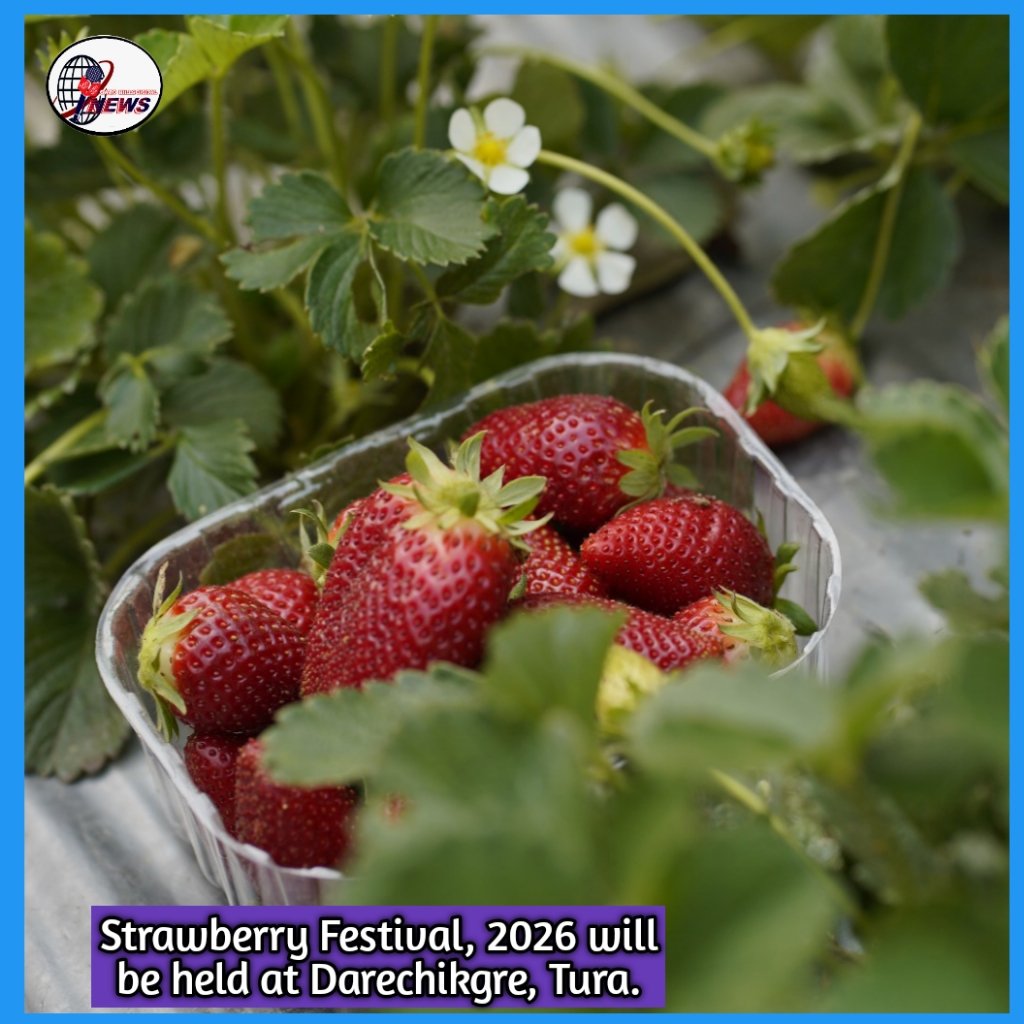
www.ghdnews.in
Shillong, February 24, 2026:The Government of Meghalaya is organising the Meghalaya Strawberry Festival 2026 across Smt, Sohliya, and Tura, highlighting the State’s expanding strawberry cultivation and creating direct market access for farmers during the peak harvest season.
The festival will be held at Smit Village (Wah-Iing-Syiem Meadows, East Khasi Hills District) from February 25–28, 2026, followed by events at Sohliya (Football Ground, Umsning, Ri-Bhoi District) and Darechikgre, Tura (West Garo Hills District) from March 4-7, 2026.
Strawberry cultivation in Meghalaya began in Sohliya in 1988 with just 50 saplings. With the introduction of drip irrigation systems in 2004 and sustained institutional support, production has expanded significantly.
Currently, Meghalaya produces around 1,200 metric tonnes of strawberries annually. Strawberry farming in Meghalaya has now expanded to over 250 villages, and more than 4,000 farmers are engaged in it.
Backed by government support, the State has improved farmgate prices, launched cold chain infrastructure and processing units, and tied up with IHM Shillong for value-added product development.
The Government is also prioritising strategic interventions in high-value fruits and flowers to improve farmers’ incomes. Shri Conrad K. Sangma, Chief Minister of Meghalaya, announced in his State Budget FY2026–27 speech that in the next financial year the sweeter Japanese Tochiotome variety will be introduced in Meghalaya. This is expected to further strengthen the State’s market position and significantly multiply returns for strawberry growers.
During the festival, visitors will be able to take part in strawberry picking, farm visits, and tasting sessions. Live performances by artists supported under the Chief Minister’s Meghalaya Grassroots Music Program (CM-MGMP) and local food stalls will also be part of the programme.
The festival serves as a direct platform for farmers to sell fresh strawberries and value-added products such as jams, juices, desserts, and other processed items. It strengthens farmer-buyer linkages while promoting local entrepreneurship, and also promotes agro-tourism in the State.